
best POS system for small restaurant: Looking for the best POS system for your small restaurant? This 2026 guide covers what actually matters for independent and takeaway owners — including zero commission ordering and WhatsApp marketing built in.
Finding the best POS system for your small restaurant is harder than it should be.
Search online and you find the same names repeated everywhere — Toast, Square, Lightspeed, Clover. These are solid systems built for well-funded American restaurant chains with technical teams, large monthly budgets, and customers who pay by card every time.
But if you run an independent restaurant, a curry house, a takeaway, a café, or a cloud kitchen — particularly one serving a community where WhatsApp is how customers communicate, delivery riders collect cash, and regular customers sometimes run a credit tab — these platforms were simply not designed with you in mind.
This guide is different. We are going to cover what actually matters when choosing the best POS system for a small restaurant in 2026, which features separate genuinely useful software from expensive noise, and why the most important question is not which platform has the most features but which one solves your specific daily problems at a price that makes business sense.
Why Most “Best Restaurant POS” Lists Get It Wrong
The majority of POS comparison articles you will find online in 2026 are written for a very specific type of restaurant — the American full-service dining concept with table reservations, wine lists, kitchen staff of twenty, and a manager who used to work at a corporate chain.
If that is not your restaurant, these lists are misleading in several important ways.
They rank on features you will never use. Tableside ordering via iPad, advanced labor scheduling, tip pooling compliance — these features are real and valuable for some restaurants. For an independent takeaway or small café, they add cost and complexity with zero practical benefit.
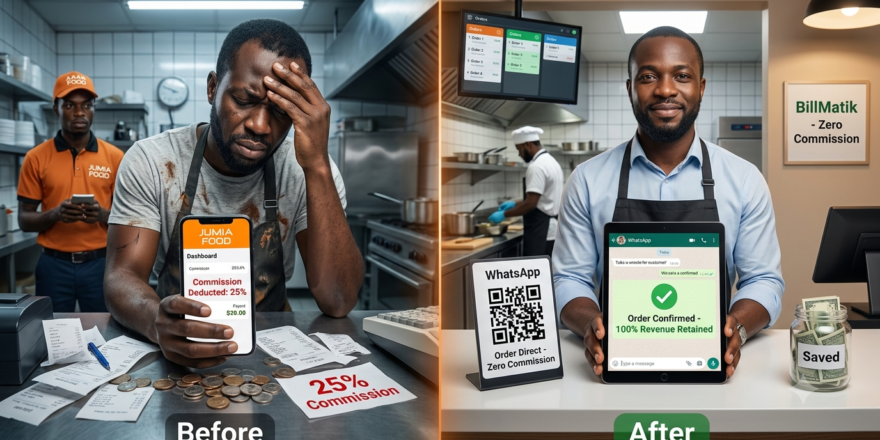
They do not account for delivery commission pain. Every independent restaurant owner in 2026 feels the pressure of delivering 25–35% commission to platforms like Just Eat, Uber Eats, DoorDash, Talabat, or GrabFood. This is one of the biggest financial problems in the entire independent restaurant sector — and most POS comparison articles treat it as an afterthought rather than a central decision factor.
They ignore how independent restaurants actually communicate with customers. In dozens of markets worldwide, the primary customer communication channel for independent restaurants is WhatsApp. Customers message to ask about the menu, place orders, confirm delivery times, and send feedback. Conventional POS systems have no answer for this because they were built before WhatsApp became a primary business communication tool in emerging markets.
They assume technical resources you may not have. Many top-ranked POS systems require professional installation, API integrations, and ongoing technical management. For a restaurant owner who runs the kitchen, manages staff, handles deliveries, and does the accounts — a system requiring a technical specialist is a burden, not a solution.

What the Best POS System for a Small Restaurant Actually Needs to Do
Before comparing specific platforms, it is worth being clear about what genuinely matters for small independent restaurant operations in 2026.
Core billing and order management
This is table stakes — every POS system does this. What differs is how smoothly it handles the specific service style of your restaurant. A quick-service takeaway has completely different billing flow than a sit-down restaurant. The best POS system for your small restaurant is the one that matches your service model, not the one with the most billing modes regardless of whether you need them.
Online ordering with zero or low commission
This is arguably the single most financially important POS feature for small restaurants in 2026. Every percentage point you pay to a third-party delivery platform comes directly out of your margin. A restaurant doing £15,000 per month in delivery orders and paying Just Eat 30% is paying £4,500 per month — £54,000 per year — to a platform for the privilege of reaching customers who, in many cases, already know and love your food.
BillMatik is the only restaurant POS with WhatsApp bulk marketing built in. One click sends your full menu to your entire customer list. They order directly. The order lands on your kitchen display. Zero commission. Zero middleman.
The best POS systems for small restaurants now include their own branded online ordering store where customers order directly, you pay zero commission, and orders flow directly to your kitchen display system automatically. The economics of this single feature can justify the entire cost of switching POS systems within the first month.
Kitchen display system integration
A kitchen display system (KDS) replaces paper tickets in the kitchen with a screen that shows incoming orders in real time. For small restaurants with one or two kitchen staff, a KDS dramatically reduces missed orders, incorrect tickets, and the chaos of a Friday night rush. The best POS systems have KDS functionality built in — not as an expensive add-on module.
Delivery management and rider tracking
Independent restaurants running their own delivery operations in 2026 face a specific challenge that conventional POS systems were not designed to solve: cash on delivery accountability. When a rider collects £25 in cash from a customer and returns to the restaurant, how do you verify the correct amount was collected? For restaurants running five, ten, or twenty deliveries per day, manual tracking on paper leads to consistent, undetected losses.
The best POS system for a small restaurant with delivery operations tracks every rider, every order, and every cash collection automatically.
Customer loyalty and credit management
Independent restaurants, particularly those serving tight-knit communities, have regular customers who expect to be recognized and rewarded for their loyalty. A built-in loyalty program — points, stamps, or discounts for returning customers — increases visit frequency and average order value without requiring a separate subscription to a third-party loyalty platform.
The credit tab feature is equally important for community-focused restaurants. Regular customers who ask to pay next time, local businesses running a monthly account, or simply trusted regulars who occasionally need to pay later — managing this manually on paper or in a notebook leads to consistent revenue losses. The best POS systems track credit balances automatically.
WhatsApp marketing capability
This feature does not appear in any of the major POS comparison articles published by mainstream review sites in 2026 — because it does not exist in mainstream POS platforms.
WhatsApp has over 2 billion active users globally. In markets including Nigeria, UAE, Pakistan, India, Philippines, Kenya, and among diaspora communities in the UK, USA, and Canada, WhatsApp is not just a messaging app — it is the primary channel through which people communicate with local businesses. Restaurant owners in these markets receive orders, handle complaints, send promotions, and manage customer relationships on WhatsApp every single day.
The best POS system for a small restaurant serving these communities should enable the owner to send their full menu directly to every customer on WhatsApp in a single action — a bulk message with the menu link attached, which customers click to browse and order directly. Every order placed through that link flows automatically to the kitchen display and dashboard.
This is not theoretical. It is a feature that exists, that restaurant owners in these markets actively use, and that generates measurable increases in direct order volume by putting the menu directly in the hands of customers who already use WhatsApp every day.
The Real Cost of Getting Your POS Choice Wrong
Choosing the wrong POS system costs small restaurants in ways that are rarely calculated upfront but become painfully clear within the first six months.
The implementation cost. Every hour you spend learning a system that is wrong for your operation is an hour not spent in the kitchen, on the floor, or building your business. Complex systems with features you will never use have correspondingly complex setup and training requirements.
The integration cost. Many POS systems charge extra for delivery integration, loyalty program activation, KDS hardware, and customer-facing ordering screens. What looks like £30 per month at signup becomes £90 per month once you have added the features your restaurant actually needs.
The commission cost. Every month you continue relying exclusively on third-party delivery platforms while your POS system offers no alternative is a month of 25–35% commission payments that a different system would have eliminated.
The switching cost. Moving POS systems after six months means retraining staff, re-entering customer data, and managing the transition while the restaurant is still operating. Getting the decision right the first time saves this entire category of cost.
What to Look for When Comparing POS Systems for Your Small Restaurant
Pricing transparency
The best POS system for a small restaurant should have clear, predictable pricing with no hidden costs. Look for: base subscription cost, cost per additional location if you plan to expand, whether KDS and online ordering are included or separate add-ons, transaction fees, and hardware costs.
Cloud-based operation
Cloud-based POS systems store your data online and can be accessed from any device — phone, tablet, or computer. This means you can check your sales report from home, manage your menu remotely, and continue operating even if your primary device fails. In 2026, any POS system that is not cloud-based is a step behind.
Free trial and onboarding support
The best POS platforms for small restaurants offer a genuine free trial — not a demo video or a 14-day credit card trial that requires a call with a sales representative. Look for 30-day free access with no card required, alongside direct setup support via WhatsApp or chat rather than a ticketing system with 48-hour response times.
Mobile-first design
For small restaurant owners, the POS dashboard needs to work perfectly on a phone or tablet — not just on a desktop browser optimized for large-screen management. In 2026, the majority of independent restaurant owners access their management tools on mobile devices.
BillMatik — The POS System Built Specifically for Independent Restaurants
Most POS systems in this guide were built for Western markets, then expanded internationally. BillMatik was built from the opposite direction — starting with the specific needs of independent restaurant owners in emerging markets and diaspora communities where WhatsApp is the dominant communication channel, delivery riders collect cash, regular customers run credit tabs, and delivery platform commissions take 25–35% of every order.
Here is what BillMatik includes as standard, with no additional modules or add-ons required:
Cloud POS
Manage tables, billing, and payments from any phone, tablet, or computer. The interface is designed for speed during service — not for accountants reviewing data on a desktop screen. Orders are processed in seconds, bills are generated instantly, and the system works on any device you already own without requiring proprietary hardware.
Zero Commission Online Ordering Store
Every BillMatik account includes a branded online ordering store where your customers place orders directly. You keep 100% of every order — no commission, no per-transaction fee, no percentage taken by a middleman. For a restaurant doing £10,000 per month in delivery orders, removing 30% commission saves £3,000 per month — £36,000 per year — that goes directly back into your business.
WhatsApp Bulk Marketing with Menu Link
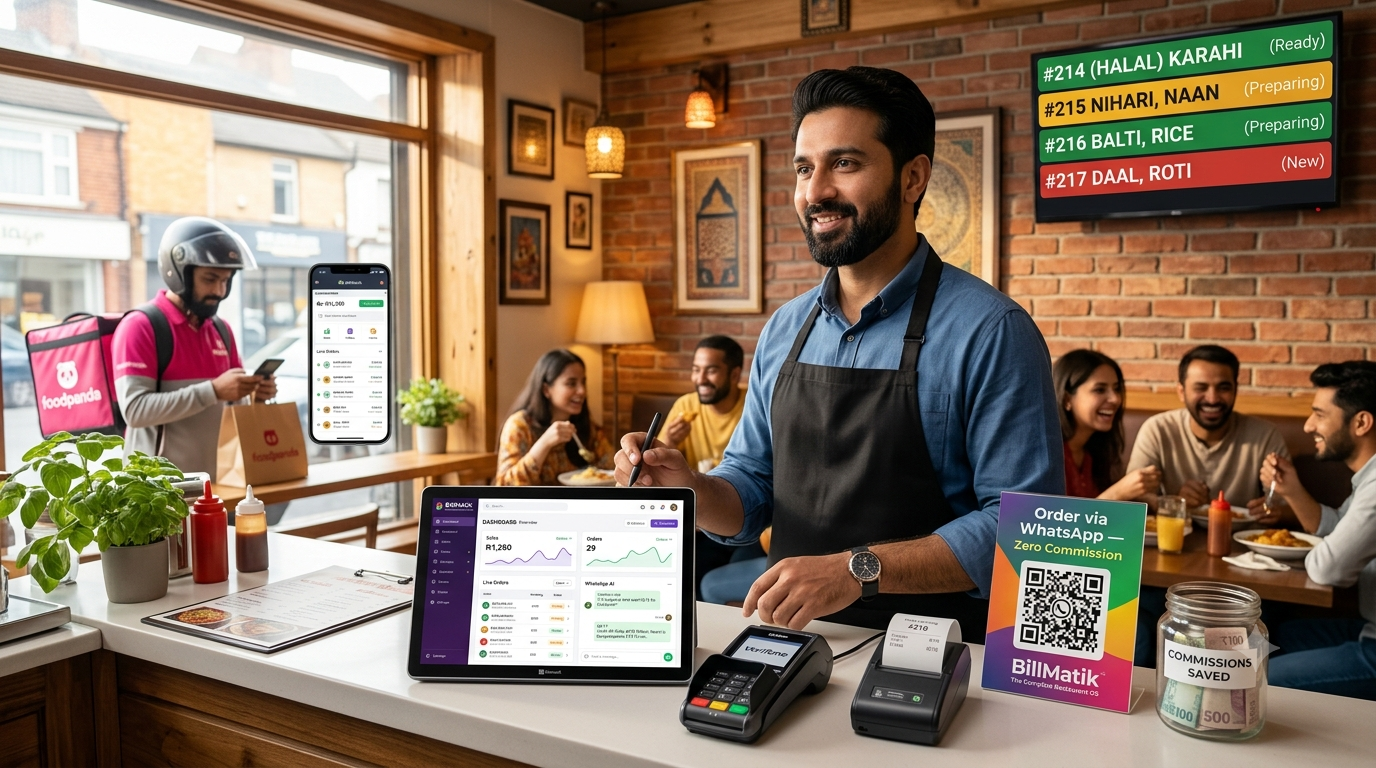
This is BillMatik’s most distinctive feature and one that exists in no mainstream POS platform. From your BillMatik dashboard, you can send your full menu directly to every customer on your WhatsApp contact list in a single action. Each customer receives a message with your menu link attached. They click the link, browse your menu, and place their order directly. The order flows automatically to your kitchen display and owner dashboard without any manual input required. For restaurant owners whose customers already communicate primarily on WhatsApp, this feature turns an existing communication habit into a direct revenue channel.
Kitchen Display System (KDS)
Every order — whether placed through the POS, the online store, or the WhatsApp menu link — appears instantly on your kitchen display screen. No paper tickets, no shouting orders across a busy kitchen, no missed items during a rush. The KDS shows each order with the items, the table or delivery reference, and the time it was placed.
Delivery Rider Tracking
Assign orders to specific riders. Track their delivery status in real time. Log every cash collection automatically so there are no discrepancies between cash collected and cash returned. For restaurants running their own delivery operations, this single feature pays for the entire software subscription within the first month of use.
Customer Loyalty Program
Built-in loyalty rewards for returning customers — points, discounts, or stamps — all managed automatically within BillMatik. No third-party loyalty subscription required, no separate app for customers to download, no manual stamp card system that gets lost or forgotten.
Credit and Tab Management
Track every credit sale automatically. See which customers have open balances, how long their credit has been outstanding, and the total amount owed. For restaurants serving regular customers who occasionally pay later, this replaces the notebook and eliminates the revenue that quietly disappears when credit balances are managed manually.
Inventory Management
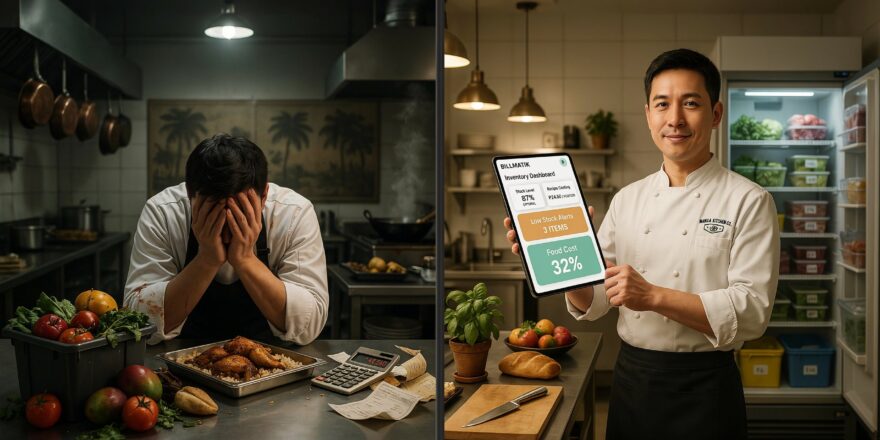
Track stock levels across all menu items. Get alerts when ingredients run low. Monitor waste and usage patterns over time. For small restaurants managing tight margins, inventory visibility is the difference between knowing what you have and being surprised mid-service by ingredients you thought were stocked.
Multi-Location Dashboard
If you operate more than one location — or plan to expand — BillMatik gives you a single dashboard view across all of them. Sales by location, inventory across sites, staff performance, and customer data all visible from one screen.
Read More: BillMatik Pricing 2026 – Complete Plans & Features Guide
BillMatik vs Other POS Systems — How It Compares
BillMatik vs Square for Restaurants
Square for Restaurants is one of the most recognized names in POS. It offers a solid free tier for very basic operations and a well-designed interface. However, Square is not available in many of the markets where BillMatik operates — including Nigeria, Pakistan, and several other emerging markets. Square has no WhatsApp marketing integration, no built-in credit tab management, and no delivery rider tracking. For small restaurant owners in the UK, USA, and Canada where Square does operate, it is a competent basic POS — but it was not built for the specific operational reality of independent restaurants serving South Asian and African diaspora communities.
BillMatik vs Toast POS
Toast is a powerful platform designed primarily for American full-service restaurants. It is not available in the UK, Africa, Southeast Asia, or the Middle East — which immediately eliminates it for the majority of BillMatik’s target market. Even where Toast is available, its pricing starts significantly higher than BillMatik and requires proprietary hardware. Toast has no WhatsApp integration and no zero-commission online ordering store equivalent for independent operators on small budgets.
BillMatik vs Loyverse
Loyverse is a popular free POS system widely used in Africa and Southeast Asia. Its free tier covers basic POS functionality, which makes it appealing for restaurants just starting out. However, Loyverse has no online ordering store, no WhatsApp marketing capability, no delivery rider tracking, and no built-in credit management. For restaurants that have outgrown very basic POS needs, Loyverse’s feature ceiling becomes a real limitation. BillMatik at $27 per month provides a complete restaurant management system where Loyverse’s paid add-ons to reach comparable functionality cost more than BillMatik’s all-inclusive price.
BillMatik vs Epos Now (UK)
Epos Now is a UK-based EPOS system with strong brand recognition in the British hospitality market. It covers core POS functionality well and has good integration options. However, Epos Now pricing for small restaurants starts at £25–£35 per month plus hardware costs, with no built-in WhatsApp marketing, no zero-commission ordering store, and no credit tab management. For Pakistani and Indian restaurant owners in Birmingham, Manchester, and London who need WhatsApp marketing and direct ordering capabilities alongside their POS, Epos Now requires multiple third-party integrations to reach comparable functionality — at a higher combined cost.

Who BillMatik Is the Best POS System For
BillMatik is specifically designed for:
Independent restaurants and takeaways running between one and twenty locations who want a complete management system without enterprise pricing or enterprise complexity.
Pakistani and Indian restaurant owners in the UK, UAE, USA, Canada, and Australia whose customers communicate primarily via WhatsApp and who are paying 25–35% commission to Just Eat, Talabat, DoorDash, or similar platforms.
Cloud kitchen operators who need online ordering, delivery tracking, and kitchen display functionality without front-of-house POS features they will never use.
Restaurant owners in Nigeria, Kenya, Philippines, and Indonesia where conventional Western POS systems are either unavailable, overpriced, or built for payment infrastructures that do not match local market conditions.
Any restaurant owner currently managing credit tabs manually, tracking delivery riders on a whiteboard, or trying to run WhatsApp promotions by messaging customers individually.
BillMatik Pricing — What You Pay and What You Get
BillMatik starts from $27 per month (approximately £22/month) with a 30-day free trial and no credit card required. Every plan includes:
- Cloud POS for unlimited transactions
- Zero commission online ordering store
- WhatsApp bulk marketing with menu link
- Kitchen Display System
- Delivery rider tracking
- Customer loyalty program
- Credit and tab management
- Inventory management
- Multi-location dashboard (on applicable plans)
There are no hidden add-ons for core features. No proprietary hardware requirements — BillMatik runs on any phone, tablet, or computer you already own.
Setup takes under 30 minutes. Direct support is available via WhatsApp — not a ticketing system with 48-hour response times.
How to Choose the Best POS System for Your Small Restaurant — Final Checklist
Before making your decision, run through this checklist:
Does it include online ordering with zero or low commission? If not, calculate your current annual commission spend and compare it to the cost of switching.
Does it have a kitchen display system included? Or is KDS an expensive add-on?
Can it track delivery riders and cash collections? If you run delivery and this is not covered, you are losing money every day.
Does it handle customer credit and loyalty natively? Or will you need a separate subscription for each?
Does it work on the devices you already own? Or does it require proprietary hardware at additional cost?
Is it available in your country with local payment support? The most feature-rich POS is worthless if it does not accept payments in your market.
Does it have WhatsApp marketing capability? If your customers communicate primarily via WhatsApp, can your POS turn that communication channel into a direct ordering channel?
What does genuine support look like? Email tickets with 48-hour response times versus WhatsApp chat that answers during your lunch rush — the difference matters when something goes wrong during a busy Friday night.
The Bottom Line — Best POS System for Small Restaurant in 2026
The best POS system for your small restaurant in 2026 is not the one with the most features, the most integrations, or the highest profile name. It is the one that solves your specific daily problems, fits your operation’s size and service model, does not require technical expertise to set up, and costs less than the problems it solves.
For independent restaurants and takeaways — particularly those in Pakistani, Indian, Nigerian, Filipino, and other communities where WhatsApp is the primary customer communication channel and delivery platform commissions are eating into already-thin margins — BillMatik is built specifically for your reality, not adapted from a system that was built for someone else’s.
The 30-day free trial with no credit card required means trying it carries no financial risk. Setup takes under 30 minutes. Support comes via WhatsApp. And the zero-commission online ordering store alone typically saves more in the first month than the cost of the subscription.
Frequently Asked Questions
What is the cheapest POS system for a small restaurant? Several free POS options exist — Loyverse and Square’s basic tier among them — but free systems typically lack online ordering, delivery tracking, loyalty programs, and credit management. The cheapest complete POS system for a small restaurant — one that includes all core features without add-ons — starts from around $27 per month. BillMatik’s 30-day free trial lets you test full functionality before committing.
Does a small restaurant need a POS system? Yes — if you are taking more than twenty orders per day, managing a menu with more than ten items, or running any kind of delivery operation, a POS system saves more in reduced errors, faster billing, and improved accountability than it costs in subscription fees. The break-even point for most small restaurants is within the first month of use.
What POS system do most small restaurants use? Square for Restaurants is the most widely used among US-based small restaurants. In the UK, Epos Now and Lightspeed are popular choices. In emerging markets, Loyverse’s free tier has large adoption. However, none of these platforms include WhatsApp marketing, zero-commission ordering stores, or delivery rider tracking as built-in features.
Can I use a POS system on my phone? Yes — cloud-based POS systems including BillMatik run on any smartphone, tablet, or computer. No proprietary hardware is required. Your existing Android or iPhone is sufficient to run a full restaurant POS operation.
What is the best EPOS system for a UK takeaway? For Pakistani and Indian takeaways in the UK specifically, the best EPOS system is one that includes WhatsApp marketing, zero-commission direct ordering to replace Just Eat and Deliveroo, and a kitchen display system. BillMatik covers all three from £22 per month — lower than most UK EPOS providers and with features specifically relevant to independent takeaway operations that UK-focused EPOS systems do not provide natively.
How long does it take to set up a restaurant POS system? Most cloud-based POS systems for small restaurants can be set up within 30–60 minutes for basic operation — menu input, table setup, and payment configuration. BillMatik’s setup typically takes under 30 minutes with direct WhatsApp support available throughout the process.
This article was written by the BillMatik team. BillMatik is an AI-powered restaurant management platform built specifically for independent restaurants and takeaways in UAE, Nigeria, Philippines, Kenya, UK, USA, Canada, and Australia. Try BillMatik free for 30 days at billmatik.mentorsucces.com — no credit card required.